
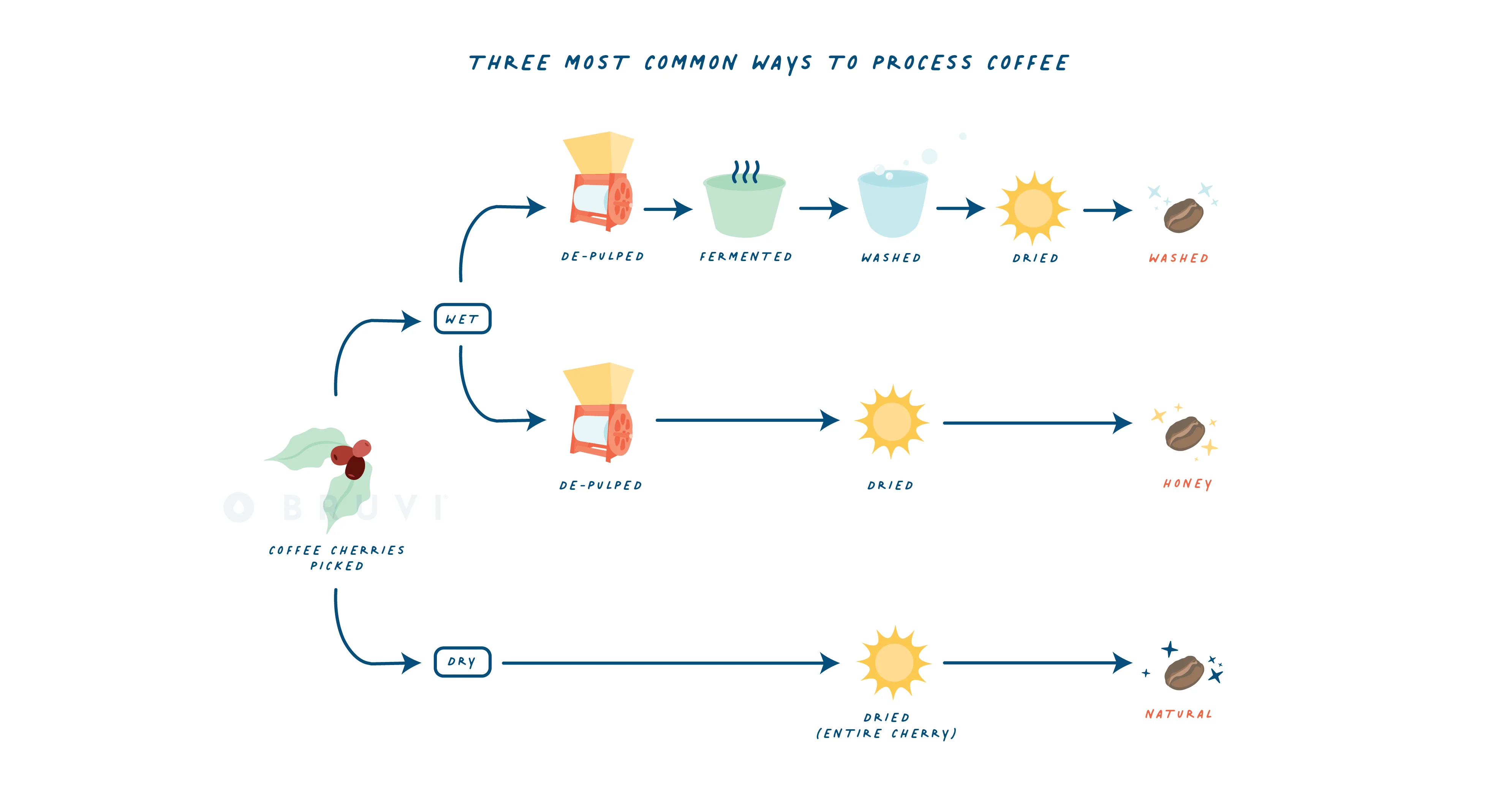
Coffee processing is a crucial step in coffee production that determines the final flavor and aroma of the coffee. In this article, we will discuss the different coffee processing methods, their impact on coffee flavor, and how they influence coffee quality.
Natural/Dry Process
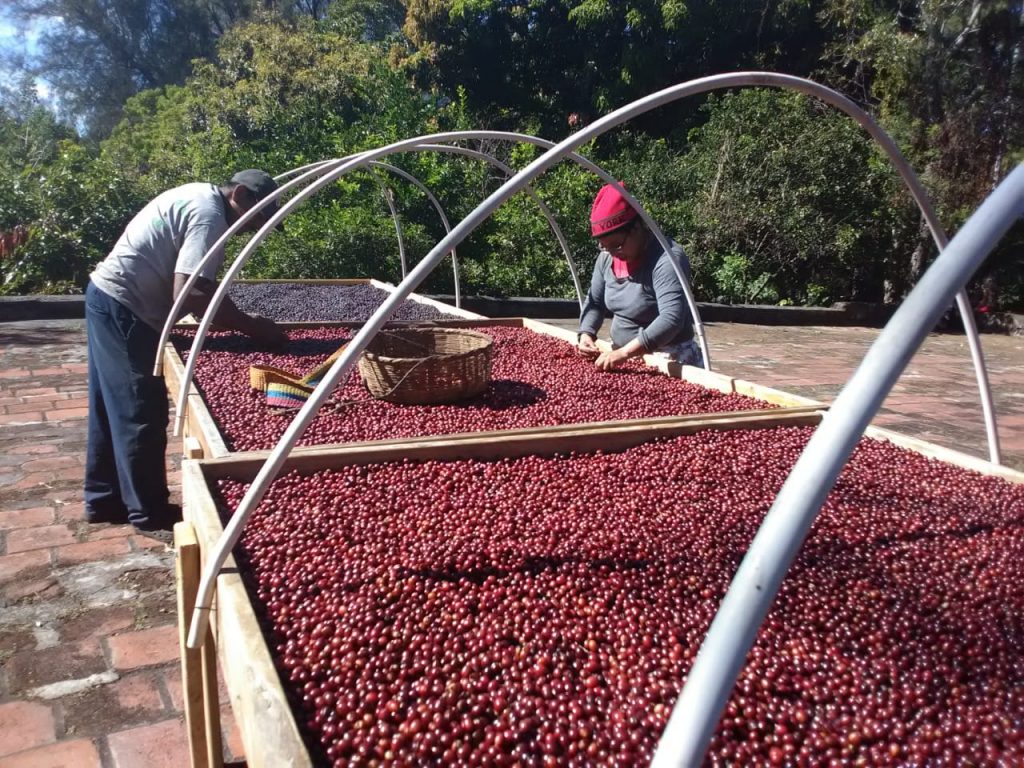
The natural or dry process is the oldest and simplest coffee processing method. The process involves drying ripe coffee cherries in the sun until they are dry enough to be removed from the coffee bean. During the drying process, the sugars and fruit flavors of the cherry are absorbed into the coffee bean, giving the coffee a fruity and sweet flavor profile.
The natural process is commonly used in regions with low rainfall and high temperatures, such as Ethiopia and Brazil. The natural process produces a unique flavor profile that is highly sought after by coffee enthusiasts.
Washed Process

The washed process, also known as the wet process, involves removing the outer layers of the coffee cherry before drying the bean. The process involves soaking the coffee cherries in water to remove the fruit pulp, leaving only the coffee bean. The beans are then fermented to remove the remaining mucilage before being dried.
The washed process results in a clean and bright flavor profile with a higher acidity level than the natural process. The process is widely used in Central and South America and produces a consistent and high-quality coffee.
Honey Process

The honey process, also known as the semi-washed process, involves removing some of the fruit pulp from the coffee cherry before drying the bean. The process involves leaving some of the fruit pulp on the bean, giving the coffee a sticky texture, hence the name honey process. The coffee is then dried, and the remaining pulp is removed mechanically.
The honey process produces a coffee with a distinct sweetness and a well-rounded flavor profile. The process is commonly used in Central America and produces a unique flavor profile that is highly sought after by coffee enthusiasts.
Experimental Processes

In recent years, coffee producers have experimented with different processing methods to create unique and exciting flavor profiles. These experimental processes include carbonic maceration, anaerobic fermentation, and natural anaerobic fermentation.
Carbonic maceration involves fermenting the coffee cherries in a low oxygen environment to create a unique flavor profile. Anaerobic fermentation involves fermenting the coffee cherries in a sealed container to create a distinct and complex flavor profile. Natural anaerobic fermentation involves fermenting the coffee cherries with naturally occurring yeast and bacteria to create a unique and complex flavor profile.
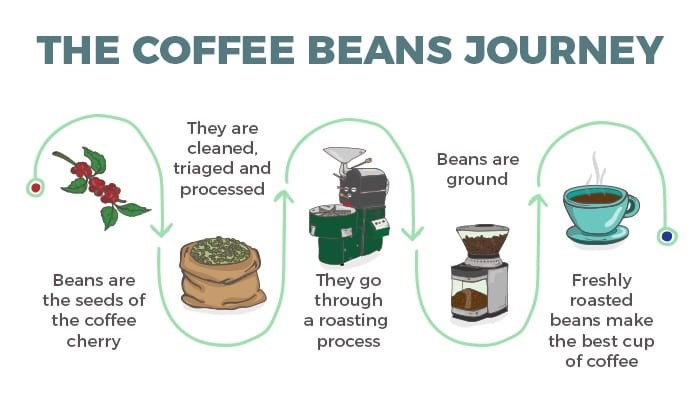
Coffee processing plays a crucial role in determining the flavor and aroma of coffee. The natural, washed, honey, and experimental processing methods each produce a unique flavor profile that is highly sought after by coffee enthusiasts. By understanding the different coffee processing methods, coffee professionals can select and roast coffee beans to create a rich and diverse range of coffee flavors.